
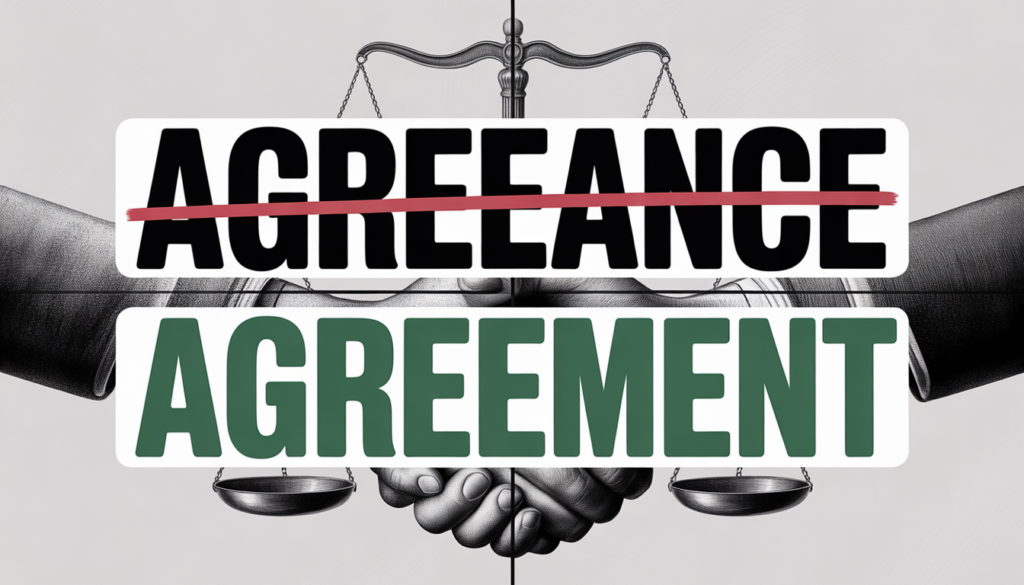
Have you ever paused mid-sentence, wondering if agreeance or agreement is the right word? You’re not alone. These two terms look similar, sound similar, and even mean roughly the same thing—but only one feels natural in everyday English today. The confusion often pops up in emails, reports, or casual chats when people want to say they’re on the same page.
In this guide, we’ll break down the differences, trace their origins, and share real-world scenario examples to help you choose confidently. By the end, you’ll know exactly when to use agreement (spoiler: almost always) and why agreeance might raise a few eyebrows.
The Basics: What Do These Words Actually Mean?
Both agreeance and agreement describe a state of harmony—when people share the same opinion, reach a mutual understanding, or settle on terms. They come from the same root: the verb agree, which traces back to Old French agreer (“to please” or “to be agreeable”).
- Agreement is the go-to noun in modern English. It covers everything from casual nods of understanding to formal contracts.
- Agreeance is a rarer, older form. It specifically refers to the state of being in agreement, but it’s fallen out of favor.
Think of it this way: agreement is like the reliable, everyday tool you reach for, while agreeance is that antique gadget you only pull out for special occasions—or never.
Etymology: Where These Words Come From
Language evolves, and so do words. Agreement entered English in the late 1400s via Anglo-Norman French, quickly becoming the standard noun for harmony or consensus.
Agreeance, on the other hand, appeared in the early 1500s, borrowed from Middle French agréance. It was common in older texts, especially Scottish English and formal writing from centuries ago. But over time, agreement won out—likely because it was clearer, more versatile, and easier to say.
Dictionaries like the Oxford English Dictionary confirm agreeance as a real word, but they label it archaic or rare. Most style guides (think AP, Chicago, or even Grammarly) recommend sticking with agreement for clarity.
When to Use Agreement (The Safe, Modern Choice)
In almost every situation today, agreement is the way to go. It’s professional, clear, and universally understood.
- Use it in business emails, contracts, negotiations, or reports.
- It works in casual conversations too: “We’re in agreement on the plan.”
- It fits when talking about legal or formal arrangements: “The parties signed an agreement.”
Here are some quick do’s and don’ts:
- Do use agreement when clarity matters.
- Do default to it in professional or academic writing.
- Don’t worry about overusing it—it’s the standard term.
When (If Ever) to Use Agreeance
Agreeance is technically correct, but it’s outdated. You’ll find it in historical literature, old legal texts, or occasionally in Scottish dialects. In modern writing, it can come across as pretentious or confusing.
Save it for stylistic flair in creative writing, or if you’re quoting old sources. Otherwise, avoid it—most readers will notice it feels off.
Scenario Examples: Real-Life Contexts
Let’s see these words in action with practical scenario examples that show why one choice usually wins.
Scenario 1: Office Email About a Project
You’re confirming a team decision on a deadline.
- With agreement: “Hi team, I’m happy to confirm we’re in agreement on the new timeline. I’ll update the project tracker accordingly.”
- With agreeance: “Hi team, I’m happy to confirm we’re in agreeance on the new timeline.”
The second version sounds stiff and old-fashioned—like something from a 19th-century novel. Stick with agreement for a professional tone.
Scenario 2: Casual Chat Among Friends
Discussing weekend plans.
- With agreement: “Yeah, we’re all in agreement—pizza and a movie at 7 sounds perfect.”
- With agreeance: “Yeah, we’re all in agreeance—pizza and a movie at 7 sounds perfect.”
Here, agreeance feels overly formal and out of place. Agreement keeps it natural and relaxed.
Scenario 3: Business Negotiation
Finalizing a partnership deal.
- With agreement: “After hours of discussion, both companies reached an agreement on the terms.”
- With agreeance: “After hours of discussion, both companies reached an agreeance on the terms.”
The agreement version reads smoothly in contracts or press releases. Agreeance might make the reader pause, wondering if it’s a typo.
Scenario 4: Historical or Literary Quote
You’re writing a blog post about old English texts.
- With agreeance: “In the 16th-century document, the author wrote: ‘We are in full agreeance with the king’s decree.'”
This is one rare case where agreeance fits perfectly—because it’s authentic to the era.
Common Mistakes and Easy Fixes
People often slip into agreeance thinking it sounds more formal. But it usually backfires. Here are typical errors and better alternatives:
- Mistake: “We came to an agreeance last night.” Fix: “We came to an agreement last night.”
- Mistake: “I’m in agreeance with your proposal.” Fix: “I’m in agreement with your proposal.” (Or simply “I agree with your proposal.”)
- Mistake: “The committee reached agreeance on the budget.” Fix: “The committee reached agreement on the budget.”
These fixes make your writing clearer and more polished.
Quick Reference Table
| Word | Modern Use? | Tone | Best For |
|---|---|---|---|
| Agreement | Yes | Standard, professional | Everyday, business, legal |
| Agreeance | Rare | Archaic, formal | Historical contexts only |
Tips for Remembering the Right Choice
To keep it simple:
- Agreement = Modern, clear, and widely accepted.
- Agreeance = Old-fashioned and rarely used.
- In any doubt, go with agreement—it’s the word everyone recognizes.
Think of agreement as the friendly handshake that works every time, while agreeance is that polite, old-school bow that might leave people puzzled.
Final Thoughts
English is full of near-twins like this, and agreeance vs agreement is one of the trickier ones. While both are real words, agreement has stood the test of time for good reason: it’s precise, professional, and never raises questions.
Next time you’re tempted to write in agreeance, pause and switch to in agreement instead. Your readers (and your writing) will thank you for the clarity.
Language changes slowly, but some words fade into history. Agreement is here to stay—agreeance, not so much.